
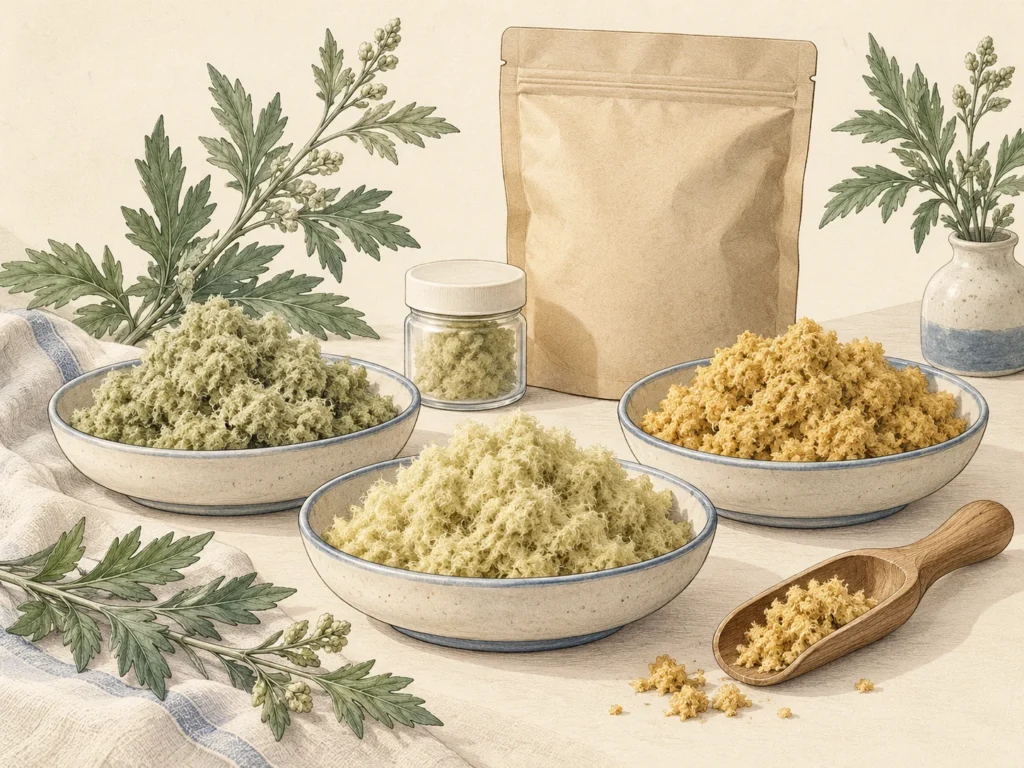
Quick answer: Moxa wool, also called moxa floss, is a loose fibrous material prepared from dried mugwort leaves. For a purchasing decision, compare the actual material, declared processing grade, intended product format, net weight and batch consistency. A golden color or a high ratio on a label is not enough to establish what will arrive in the bulk order.
A photograph of loose moxa can make several products look almost identical. The differences become clearer when you open the sample: how much loose leaf material is visible, how the fibers hold together and how consistently the supplier packs each bag.
For a clinic supplier, distributor or small private label brand, the task is to turn those observations into a specification the factory can repeat. This guide explains what to ask before buying moxa wool from China.
What Is Moxa Wool?
Moxa wool is the fibrous material obtained by processing and refining dried mugwort leaves. It is also described as moxa floss or, in some catalogs, moxa punk. Suppliers may sell it loose or use it to make rolls and other formed consumables.
These names do not identify one uniform grade. Loose leaf fragments, finely milled mugwort powder and refined fibrous floss are different materials. Ask for a close-up of the actual product and a physical sample, especially when a translated listing uses “powder” and “wool” interchangeably.
| Product description | What to establish | Why it matters |
|---|---|---|
| Loose moxa wool or floss | Fiber condition, declared material and refinement | Defines the material being purchased |
| Cut or crushed mugwort leaf | Leaf and stem content, cut form and intended application | Should not be substituted for an approved floss sample |
| Mugwort powder | Whether it is milled leaf or another prepared ingredient | Powder specifications are different from fiber specifications |
| Finished moxa roll | Fill material, rolling, weight and dimensions | The finished product adds variables beyond the wool |
How to Compare Grades Without Relying on a Name
Descriptions such as “golden,” “premium” and “professional” can help identify a supplier's product range, but they need a definition. Ask what changes between its grades and whether the sample code will remain the same on the quotation and order.
A stated processing ratio commonly describes leaf input relative to floss output. Before comparing two ratios, establish what material was weighed and how the factory calculated the yield. Do not read the ratio as a standardized purity percentage or a promise of a particular heat profile.
Keep origin, storage age and refinement as separate questions. The place where the factory operates is not necessarily the place where every batch of leaves was grown. Likewise, a material-aging claim needs a defined starting date and supporting records.
The useful outcome is a named product reference, an approved sample and a short written description. That is more practical for a repeat order than “the best quality you have.”
What to Look at in a Physical Sample
- Texture: Compare fiber structure and how the material separates. Record the sample condition rather than judging it only through a compressed bag.
- Visible foreign material: Look for unexpected fragments, debris or differences from the declared composition. Agree what is unacceptable.
- Consistency: Compare more than one pack where practical. A selected showroom sample may not represent routine packing.
- Odor and condition: Note unusual odor, visible dampness, clumping or suspected contamination. These observations raise questions; they do not authenticate aging years.
- Pack weight: Check the declared net material weight separately from the bag, jar and shipping carton.
Color alone does not establish grade, age or performance. If the intended buyer needs a functional comparison, agree an appropriate evaluation with the supplier and qualified users. Do not replace that assessment with an assumption based on appearance.
Bulk Bags, Retail Packs and Repacking Plans
The most economical incoming pack is not always the most practical one. A distributor selling small packs may prefer factory-filled retail units to reduce handling after arrival. Another buyer may want larger packs for an established repacking operation.
If repacking is planned, decide who handles the filling, weight checks, labels and batch records. Confirm the receiving facility's requirements before choosing bulk packaging. Avoid mixing different lots just to make the final pack sizes convenient.
| Specification item | Record on the order |
|---|---|
| Material and grade | Named factory reference, declared composition and approved sample |
| Quantity | Net weight per pack, number of packs and total net weight |
| Packaging | Inner protection, closure, outer carton and label version |
| Traceability | Lot identification and the records supplied with the shipment |
| Acceptance | Agreed inspection scope, defects and change-approval process |
From an Approved Sample to a Repeat Order
Retain an identified reference sample and connect it to the quotation. Ask the factory to notify you before changing the raw-material source, processing reference or packaging. A purchase order should not depend on a salesperson remembering a conversation several months later.
Before shipment, the agreed inspection can compare accessible packs, labeling, net weights and visible condition with the order. The sample size and inspection scope should be clear; a sample inspection does not mean every bag has been opened.
For a sourcing discussion, send the product form you want, reference photos or samples, approximate quantity and desired pack weight. We can then help compare manufacturers and define the next sample step. For related formats, see our moxa sticks buying guide.
Frequently Asked Questions
Is moxa wool the same as moxa floss?
The names are commonly used for the loose fibrous material. Confirm the actual supplier reference because catalog terminology and grades vary.
Is moxa wool the same as mugwort powder?
No. Fibrous floss and milled powder are different product forms. Request a physical sample and a clear material description before ordering.
Does golden moxa always mean a higher grade?
No. Treat the description as a starting point. Compare material, visible condition and the supplier's stated grade definition against an approved sample.
Should I buy bulk bags or finished retail packs?
That depends on your distribution and repacking arrangements. Compare the complete cost and the work needed after arrival, not just the material price.
Can GCB help arrange custom pack weights?
We can discuss factory filling and private label packaging. Feasibility and minimum quantities depend on the material, pack and production process.
What information helps GCB start a supplier comparison?
Share your target country, reference material, intended sales channel, approximate quantity and pack weight. Existing samples make the comparison more precise.
Related guidance: Moxa Product Sourcing · Our Moxa Sourcing Story · Samples & MOQ
Updated October 18, 2026.
About Global China Bridge
Global China Bridge is a China-based sourcing and product-development service company helping overseas entrepreneurs, small brands, clinic suppliers, retailers and other small businesses work with Chinese manufacturers. We support supplier searches, factory verification, samples, OEM and private label packaging, production follow-up, quality checks and shipping coordination.
Send us your reference material, target country, approximate quantity and preferred pack weight. We can discuss supplier comparison, samples and a clearer product specification. Small orders are welcome to discuss. We start with a free conversation, then agree a clear scope and fee for any work.