
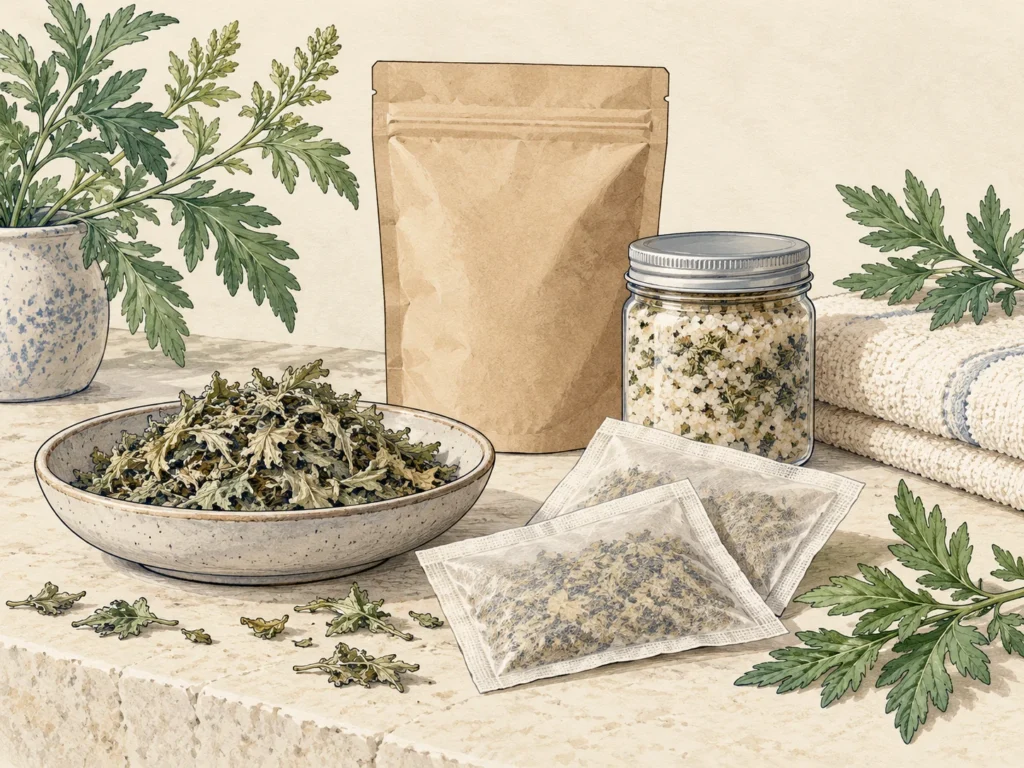
Mugwort bath and foot soak products can be loose herbs, prefilled sachets, powders or formulated blends. Choose by the complete ingredients, intended use, pack format and directions. For a private label project, approve the material, inner bag, fill quantity, outer packaging and product information together.
A photograph of an herb-filled pouch does not show how the bag performs when wet or whether the product is intended for a full bath or a smaller foot-soak container. Those differences affect both the customer experience and the purchasing specification.
This guide explains the available formats and how overseas retailers, small brands and service businesses can compare samples before placing an order.
What is a mugwort bath product?
The term describes a product intended for use in bath water that contains a mugwort-derived ingredient. It may include dried plant material, an extract or other components. A mugwort foot soak is positioned for a different use format, but it still needs a clear product description.
Check the full ingredient list. A product featuring mugwort can contain additional herbs, salts, fragrance or other ingredients. Do not assume the contents are only dried mugwort or that two similarly named products have the same formulation.
For a commercial project, establish whether you want a single-botanical product or an agreed blend. That decision should be made before asking suppliers to quote the packing.
Which product formats should you compare?
| Format | What to compare | Main packaging question |
|---|---|---|
| Loose dried herb | Botanical identity, plant parts, cut and condition | How the material is contained and handled for the intended use |
| Prefilled herb sachet | Contents, fill weight, bag dimensions and wet performance | Inner-bag material, closure and protective outer pack |
| Powdered product | Milled herb, extract or blend, particle form and composition | Moisture protection, dispensing and directions |
| Formulated salt or other blend | Complete ingredients and finished-product specification | Container compatibility, closure and transport protection |
A ready-to-use bath product is different from a raw-material bag. If you buy an ingredient and plan to repack or blend it, clarify the additional product-development, assessment and labeling work.
Bath soak vs. foot soak: can one product cover both?
Potentially, if the manufacturer has defined both uses and supplied appropriate directions. Do not assume the same quantity or instructions apply simply because the ingredient list is similar.
A full bath and a foot-soak container can involve different water volumes, pack sizes and handling expectations. The proposed use should guide the product brief and the supplier's recommendations.
For a buyer comparing finished products, read the directions for the exact pack. This article does not provide a universal water temperature, soaking duration or number of sachets for every mugwort product.
Start with the herb or formula
Ask the supplier to identify the botanical ingredient and included plant parts. For dried material, agree the cut, stem content, fine material, condition and relevant batch information. Our dried mugwort buying guide explains these checks in more detail.
If the product includes a prepared extract or a blend, request the complete composition. The plant story on the front of the pack should not replace an accurate ingredient description.
Material processed for a different application is not automatically suitable for a bath product. Define the intended use and relevant quality requirements before selecting a supplier or printing retail packaging.
What should you check in an inner sachet?
The inner bag is part of the product. Ask for its material, dimensions, closure method and agreed fill quantity. Confirm how it is intended to be handled and whether it is supplied as a single-use product.
Evaluate a complete sample under the manufacturer's intended conditions. Record whether the bag retains its contents, whether the seal stays intact and whether fine material escapes more than expected. Ask the supplier to explain and address any discrepancy.
Do not infer the bag's performance or suitability from a dry photograph. A thicker-looking fabric is not automatically better, and a decorative drawstring does not establish how the finished pack performs.
Private label packaging: what can be customized?
Discuss the inner sachet, individual protective pack, retail pouch or box, pack count and shipping carton. Each serves a different purpose. A printed kraft outer pouch does not by itself establish moisture protection or a plastic-free product.
Confirm the actual materials behind environmental claims and who can support those claims. Keep the product description, net contents and directions consistent across the inner and outer packs.
For a first order, compare standard packing with a label against fully printed packaging. Product minimums and print-run minimums can differ, so ask for them separately. GCB can help coordinate sample and MOQ discussions.
What belongs in the supplier brief?
| Area | What to specify |
|---|---|
| Product and use | Bath, foot soak or both; finished product or raw material |
| Composition | Botanical identity, plant parts and all other ingredients |
| Inner pack | Bag material, size, fill quantity, closure and acceptance points |
| Retail presentation | Protective packing, pack count, artwork, directions and batch coding |
| Quality scope | Relevant material and product information, sample approval and inspection arrangements |
| Commercial terms | Quantity, separate packaging minimums, lead times and delivery basis |
Ask each supplier to quote against the same brief and identify exceptions. Otherwise, a lower offer may contain less material, another herb blend or simpler protection rather than a genuine like-for-like saving.
Plan the first order around a complete sample
Approve the packed product, not only a loose herb sample and a separate box drawing. Record the formulation or material version, fill quantity, bag construction, printing and acceptance points.
Agree what changes need approval during production. A substitute inner fabric, a different cut of herb or a changed seal can affect the product even when the outer box is unchanged.
Before shipment, inspect against the agreed scope for counts, labels, seals, visible condition and packing. Keep those checks distinct from specialist product assessment and the buyer's destination-market responsibilities.
Keep the product description realistic
Describe what the product is, how it is presented and the experience its actual directions support. Avoid promising to treat disease, correct hormones or guarantee sleep because a botanical has a traditional-use story.
Follow the finished product's directions and suitability information. Do not treat a loose herb or essential oil as a direct substitute for an assessed bath formula. For a brand, clear product information is part of preparing a consistent customer experience.
Frequently asked questions
Is a mugwort bath soak the same as a foot soak?
Not automatically. A product may be designed for one or both uses. Check the exact directions, pack size and manufacturer-defined application.
Are herb sachets always better than loose leaves?
No. They offer a different format. Compare contents, containment, handling and the intended product experience rather than ranking formats by appearance alone.
Can a small brand use its own logo and packaging?
Yes, subject to supplier capability and product and packaging minimums. Discuss the inner bag, protective pack, outer presentation and printing separately.
Can the same inner sachet be reused?
Follow the product's instructions. Do not assume reuse is appropriate when the item is supplied or assessed for single use.
What should a sample set include?
Request the proposed contents, inner bag, protective packing, retail presentation and product information. A complete sample makes the approval clearer.
How does GCB help with a first bath-product order?
We can help compare suppliers, clarify materials and minimums, coordinate samples and private label packaging, and arrange agreed production follow-up and checks.
Related guidance: OEM & Private Label · Samples & MOQ · Pricing & Payment
Updated October 18, 2026.
About Global China Bridge
Global China Bridge is a China-based sourcing and product-development service company helping overseas entrepreneurs, small brands, retailers and other small businesses work with Chinese manufacturers. We support supplier searches, factory verification, samples, OEM and private label packaging, production follow-up, quality checks and shipping coordination.
Planning a mugwort bath or foot soak project? Tell us your target country, product requirements, approximate quantity and packaging idea. Small orders are welcome to discuss. We start with a free conversation, then agree a clear scope and fee for any work.