
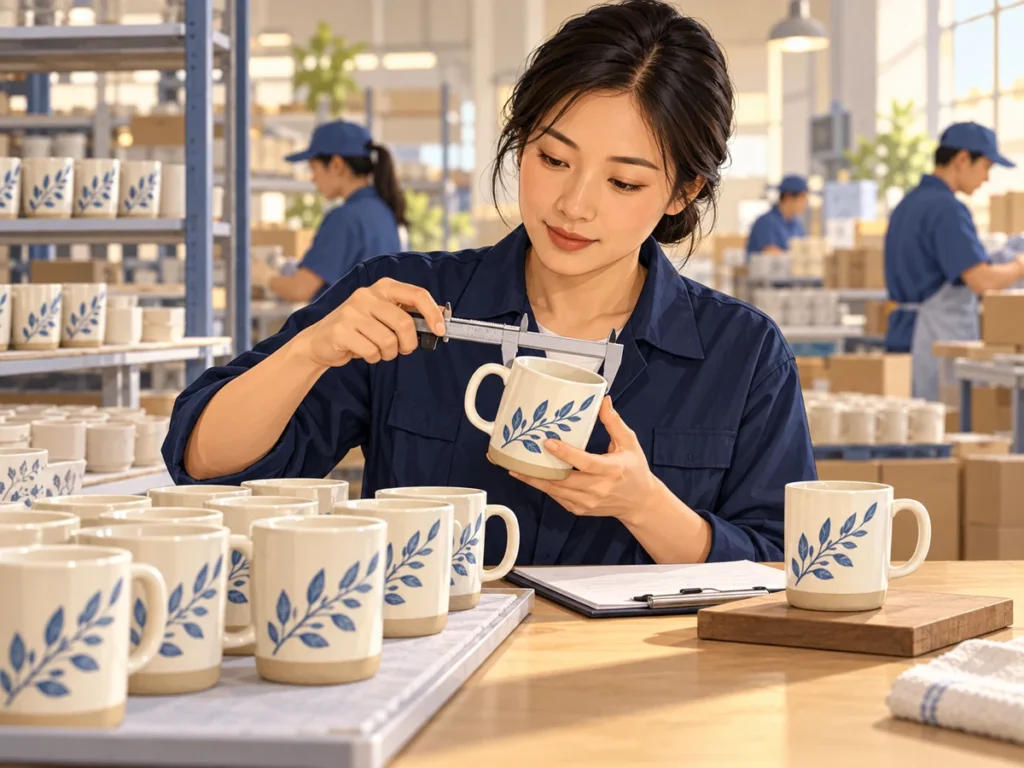
An approved sample is a reference, but it does not automatically control how a factory makes your order. To reduce differences, connect the sample to written specifications, the intended materials and processes, an identifiable revision, and checks at the start of production.
You approve a product that looks right, feels right and works as expected. Weeks later, the bulk order arrives with a different finish, a weaker fitting or packaging that offers less protection. For a small business, the problem reaches beyond the factory: you may already have customer commitments and limited money for a replacement order.
The useful question is what changed between the sample and the production run. A factory may have made an unauthorized substitution, but there may also be a gap in the approval record or a process that was never tested at production scale. Finding that gap early gives you more options.
First, ask what kind of sample you approved
A showroom sample demonstrates a product the supplier already has. A development prototype helps answer design questions. A pre-production sample should represent the agreed version more closely, but you still need to ask which materials, tooling and methods were used.
If a sample was hand-finished by a skilled technician while the order will use another process, its appearance may be difficult to repeat. Ask the factory to identify these differences before you approve it. A beautiful sample with unexplained production assumptions leaves an important question unanswered.
Turn the sample into an identifiable production reference
Keep a labelled reference with the supplier, model, date and revision. Where practical, retain a matching sample yourself and confirm which one the factory will use. Record agreed changes so an older version does not remain on the production floor.
Write down dimensions, tolerances, material grade, finish, function, accessories and packaging. Photographs can support appearance checks, but colour and surface texture may need physical references and an agreed viewing method. Separate what the sample demonstrates from what still needs measurement or testing.
Look for changes in materials, people and processes
A sample maker may work with material already in the workshop; a bulk order may require a new material purchase. Finishing may move to another subcontractor. A different tool, machine setting or assembly method can also change the result.
Ask which critical operations will happen at the factory and which will be outsourced. Require written approval before changing specified materials or processes. For important properties, decide what evidence or testing is appropriate rather than accepting an assurance that the alternative is equivalent.
Check the first production pieces while changes are still possible
Before the full batch advances, compare representative first pieces with the approved requirements. Check the features that would make the product difficult to sell or costly to repair: fit, finish, function, assembly and any essential packaging details.
The timing matters. Discovering a finish problem before the whole batch is coated offers a different set of options from discovering it after packing. A trial run can help expose process problems, although passing a small run does not guarantee every later piece.
Use a comparison record that makes disagreements specific
A message saying “the quality is different” is hard to resolve. Record the requirement, the observed difference, how it was checked, and the affected quantity or sample. Keep dated photographs with measurements where they help.
For example, distinguish a cosmetic mark from a fitting that no longer closes correctly. Agree defect categories and acceptance criteria in advance. This gives the supplier a practical basis for sorting, correction and reinspection.
If the batch differs, work through the affected requirements
Ask the factory to identify the cause and isolate affected goods. Discuss whether rework can restore the agreed requirement and whether it creates another risk. A price reduction is only useful if the goods remain suitable for your intended use.
Review inspection and payment decisions against the terms you agreed. Do not treat a promise of better quality on the next order as a solution to unusable stock now. Record the correction, timing, responsible person and verification step.
An example: the sample fits, but the batch does not
Imagine a small brand ordering a metal storage box. The sample lid closes smoothly, but production pieces catch because the coating and assembled dimensions differ from the reference. This is a hypothetical example, not a GCB client case.
Checking appearance alone would miss the problem. A first-piece fitting check using agreed dimensions and the intended coating process could reveal it before the whole batch is completed. The reference needs to describe the working product, not just its photograph.
Bryan's view
When I see a good sample, I want to understand how the factory plans to repeat it. The value of careful follow-up is in connecting the buyer’s approval with the workshop’s actual instructions. GCB can help clarify those instructions, communicate changes and coordinate checks suited to the product.
Meet Bryan and see how we work
I'm Bryan, the founder of Global China Bridge, based in Beijing. I help overseas entrepreneurs and small businesses clarify and coordinate product and manufacturing work in China.
Helping your business move forward gives ours a foundation to grow. Work you entrust to us deserves careful attention, clear communication and follow-through on the tasks we agree.
Meet Bryan and read our story · Explore our sourcing stories
Questions buyers often ask
Does an approved sample guarantee the bulk order?
No. It provides a reference. Consistent production still depends on clear requirements, suitable processes and appropriate checks.
Should the factory keep the approved sample?
Usually it helps to keep an identifiable reference available to production and quality staff. Confirm its revision and retain your own reference where practical.
Are photographs enough for approval?
They can support a record, but may not settle dimensions, fit, colour, texture or performance. Use the checking method suited to each requirement.
Should I inspect every production piece?
That depends on the product and consequences of failure. Agree sampling, testing and any necessary individual checks with a competent inspection provider.
Can I accept a different material if the product looks the same?
Check whether the change affects function, durability or other requirements. Appearance alone does not establish equivalence.
What should I send GCB?
Send the sample record, specifications, order quantity and the differences you are concerned about. We can discuss which next check would be useful.
Keep the approved version connected to production
Share your product, sample approval record and planned order. The first conversation is free. If a specification review, factory follow-up or quality check would help, we will define the task and fee before starting.
Prefer email? Write to service@globalchinabridge.com.
Continue with your next question
Updated: October 9, 2026