
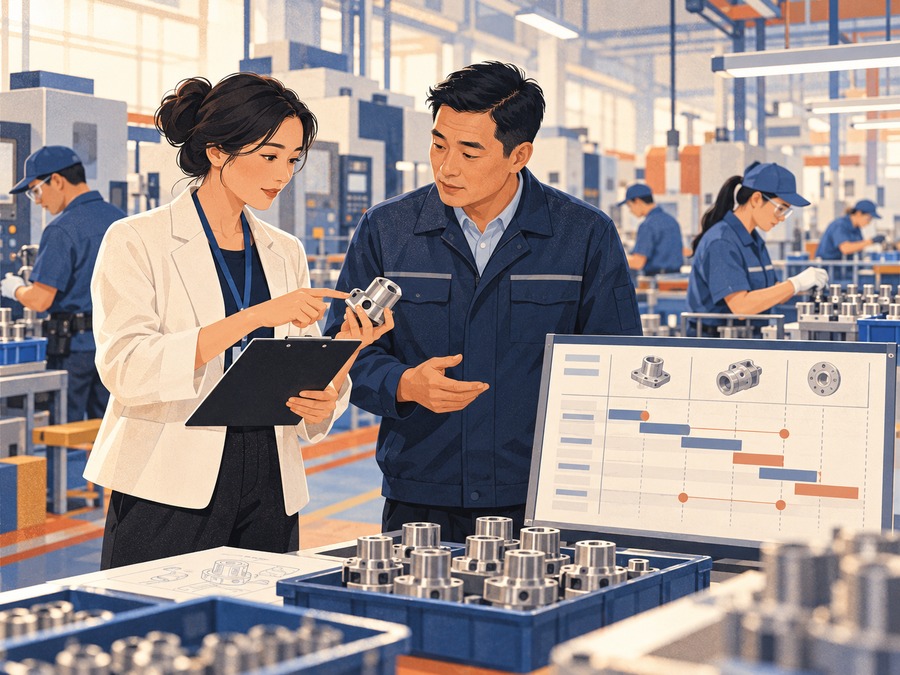
An on-site factory visit in China helps you check production conditions and makes your oversight visible to the people doing the work. When a competent representative arrives on your behalf, asks specific questions, and follows up on findings, the factory can see that its commitments will be examined. That can encourage greater care, although a visit alone cannot guarantee performance.
You have approved a sample and discussed the order several times. The supplier says the quality will be consistent and the delivery date is achievable. From overseas, you receive updates and photographs, but you still wonder how much attention your order will receive once production gets busy.
You do not want to accuse the factory of anything. You want to know that the people responsible understand your requirements and that unresolved questions will receive a proper answer.
Sending someone suitable to the factory can help. The visit gives you evidence about the work and communicates something practical: there is a buyer behind this order, there is a representative checking the details, and there will be follow-up.
Physical presence makes your oversight visible
In an email exchange, your requirements may remain with the salesperson. An on-site visit can bring them into a conversation with the production manager, quality staff, and the people responsible for packing or delivery.
Your representative can ask where the approved sample is kept, how the latest drawing reaches operators, and who confirms that a correction has been completed. The factory sees that your questions concern how the job will actually be done.
In our view, this creates a modest, constructive pressure to be accountable. General reassurance is less persuasive when someone can compare it with the production floor and ask for supporting evidence. The effect varies with the supplier, the representative's competence, and what happens after the visit; it is a reasoned expectation rather than a promise about every factory.
The aim is to make careful attention part of the working relationship. A responsible manufacturer can use the visit to clarify requirements, explain genuine constraints, and resolve misunderstandings before they affect the order.
The representative needs to understand what they are checking
Simply arriving in China does not make someone qualified to assess a production process. A visitor who photographs the entrance and accepts every explanation may provide little meaningful oversight.
A useful representative prepares around your product. They know which dimensions, finishes, materials, functions, or packaging details matter. They recognize which questions need an engineer, inspector, laboratory, or other specialist.
For example, if the supplier says the finish is controlled, the representative can ask which reference is used, what the acceptance requirements are, and how ordinary production pieces compare. If a delivery date is confirmed, they can ask about material availability and the actual production slot.
This is how the factory recognizes that vague answers will not settle the question. The visitor can connect a claim to the relevant process, record, or person and explain any remaining gap to the buyer.
They also need a clear mandate. A person checking your order should know what they may request or confirm and which changes require your approval. Being present does not automatically authorize them to accept a different material, waive a defect, or approve shipment.
Specific questions carry more weight than a general warning
Telling a supplier to “take our order seriously” leaves room for different interpretations. Checking a particular requirement makes the expectation concrete.
| Your concern | What a prepared representative can ask | What becomes clearer |
|---|---|---|
| The finish must match the sample. | Where is the approved reference, and how are current pieces checked against it? | The standard being used and whether the check is actually performed. |
| A sample defect must not recur. | What caused it, what changed, and what evidence shows the correction works? | Whether the issue has been investigated and followed through. |
| The goods must be ready on time. | Which materials and production slot are confirmed, and what could delay packing? | The dependencies behind the promised date. |
| No unapproved changes should be made. | Who authorizes substitutions and how is buyer approval recorded? | The process for controlling changes. |
| Variants must not be mixed. | How are batches identified during storage, packing, and release? | The controls protecting the correct shipment. |
The value comes from the quality of the questions and the evidence received. A long list of questions that nobody checks afterward can become another piece of paperwork.
A visit can connect the salesperson's promise to production responsibility
Perhaps you have been told a modification is “confirmed,” but it is unclear who confirmed it. During a visit, your representative can discuss it with the relevant production person and check which drawing or instruction they are using.
This may reveal a simple communication gap. The salesperson understood your request, but the change has not yet reached the workshop. Or the workshop has received it but needs a different material or more time.
Finding that gap before production is useful to both parties. You can agree on the final requirement and the factory can plan against something clear.
Record the decision and its owner. If the production manager says a revised sample will be ready on Friday, note what must change and how the result will be checked. You now have a concrete point for follow-up rather than another reassuring message.
Follow-up gives the visit lasting value
A supplier may prepare carefully for a visit. That preparation can make requirements more visible, but it does not establish that the same practices will continue after the visitor leaves.
Document the issues found and the actions agreed. For each important item, specify the responsible person, completion date, evidence required, and who will review it. Distinguish an action proposed from one verified as complete.
If the agreed correction is a new protective packing method, photographs may demonstrate part of the change. Checking whether it consistently protects the product may require further observation or inspection. Match the evidence to the question.
Where necessary, arrange a production check or shipment inspection at a relevant stage. In its description of during-production checks, SGS explains that such work compares goods against confirmed requirements and can identify nonconformities while correction is still possible.
Oversight becomes more credible when the supplier knows that outstanding items will be reviewed. Repeated promises without a completion check weaken that effect.
Keep the pressure professional and proportionate
You need a supplier willing to communicate openly. Threats, public embarrassment, or demands beyond the agreed scope can make that harder and distract from the production issue.
Explain why the visit is being arranged, what access is needed, and how findings will be discussed. Respect confidentiality and safety requirements. Ask about genuine limitations instead of assuming every delay or defect is deliberate.
Be firm about your own requirements. A representative can state that a material change needs your approval or that a defect remains unresolved. They should also report honestly when a request cannot be met at the proposed quantity, price, or deadline.
Constructive pressure means commitments receive attention and are checked. It does not mean forcing a factory to make an unrealistic promise. Your buying decision is stronger when the difficult information reaches you before you commit further.
For example, a visit can turn an unresolved defect into an owned task
Imagine you are preparing a first order of 400 branded products. The sample has a small assembly issue. The salesperson says it will be fixed in production, but you have not seen an explanation or a corrected version.
Your representative visits with photographs of the issue and the agreed requirement. The production supervisor examines the sample and identifies a fitting problem. They agree to adjust the process, produce a revised sample, and check the relevant feature before the batch continues.
The representative records the action, the person responsible, and the date for review. When the revised sample arrives, it is checked against the original concern. If it is still wrong, the issue remains open.
This is an illustrative scenario, not a reported Global China Bridge case. The useful change is that a broad promise has become a specific task that someone owns and someone will check.
The presence of a prepared representative can help bring that attention to the issue. Whether the factory actually resolves it must be judged from the result.
Choose the visit that answers your current question
Before ordering, a factory assessment may help you examine the site, relevant capability, quality practices, and proposed production arrangements. During production, checking can focus on the work currently being made. Before shipment, an inspection can examine the completed batch within an agreed scope.
These activities answer different questions. A good initial visit does not establish that the finished shipment conforms to your requirements. A shipment inspection does not explain every part of a factory's management system.
Timing matters, too. A visit after everything has been packed may leave fewer practical options for correcting a process problem. Start with the decision you need to make and arrange suitable checking before that decision becomes harder to reverse.
For a small, straightforward order, a focused task may be appropriate. For safety-critical, regulated, or technically demanding products, use relevant specialists and testing. A general representative cannot replace that expertise.
What an on-site visit cannot promise
Even a well-prepared representative sees only the processes, records, and products available during the visit. Some problems remain hidden, conditions can change, and an announced visit may not reflect every working day.
A visit does not automatically create priority for your order, give the visitor control over factory staff, or guarantee quality and delivery. It also does not replace clear specifications, suitable terms, or the buyer's own decision about whether to proceed.
Its practical value is stronger evidence, clearer responsibility, and visible follow-up. Be cautious about anyone offering a complete guarantee merely because they have visited the site.
You can start with one question that needs an answer on the ground
You may already have a supplier and want the relationship to work. There is no need to replace it simply because you want independent checking.
At Global China Bridge, we can discuss what remains uncertain and what work would help. Depending on location, supplier cooperation, and the competence required, that may include preparing questions, coordinating access to production personnel, or arranging appropriate on-site checking and follow-up.
Before paid work starts, we agree on the task, fees, reporting, and your representative's authority. Travel, independent inspection, testing, or other third-party charges are discussed separately. You should understand what the findings establish and what remains unverified.
Meet Bryan and understand how we work
I'm Bryan, the founder of Global China Bridge, based in Beijing. I help overseas entrepreneurs and small businesses explore and coordinate product and manufacturing work in China.
I believe work you entrust to us deserves careful attention. For supplier checking, that means preparing around your needs, asking practical questions, and following up on the responsibilities we agree to take on.
Meet Bryan
Read why I started Global China Bridge and how I approach a client's plans.
Meet Bryan and read our story →Explore Sourcing Stories
Read about practical questions and decisions involved in our sourcing work.
Read our sourcing stories →Tell me which promise you need to verify
It might be a promised correction, a production date, or the claim that your product will be made at a particular factory. Share the product, expected quantity, destination market, and the question affecting your next decision.
The introductory conversation is free, with no obligation to proceed. If there is useful work to do, we can begin with a small, clearly defined task and agree on its cost first. Keep sensitive designs and bank details out of the initial message.
Discuss factory oversight with Bryan
Prefer email? Write to service@globalchinabridge.com.
Questions buyers often ask
Why does an on-site factory visit matter if communication is good?
Good communication is valuable. A visit can add direct observations and connect your requirements to the production people, records, and processes behind the updates.
Does sending a representative make a factory take my order more seriously?
It can make your oversight more visible, especially when the representative is prepared and follows up. The effect is not automatic; judge the supplier by evidence and actual performance.
Does my representative need to be a technical expert?
They need competence appropriate to the agreed task and should recognize where specialist expertise is required. Complex processes and product safety questions may need an engineer, auditor, inspector, or laboratory.
Can the representative approve changes on my behalf?
Only within the authority you explicitly agree. Material substitutions, concessions, shipment approval, and other important decisions should have clear approval rules.
Will a factory see the visit as distrust?
Explain the scope and purpose respectfully. Clear requirements and fair reporting can support the relationship. You cannot predict every supplier's response, so agree on access before arranging travel.
Is one visit enough?
It depends on the question and order risk. Initial capability, current production quality, and final shipment conformity may require different checks at different times.
What should happen after a problem is found?
Record the finding, its relevance, the agreed action, owner, deadline, and required evidence. Verify the result before treating the issue as resolved.
Can you help with a factory I already work with?
We can discuss your supplier and concerns first. The useful scope depends on access, location, cooperation, and any specialist requirements.
Continue planning your purchase
Updated: October 5, 2026