
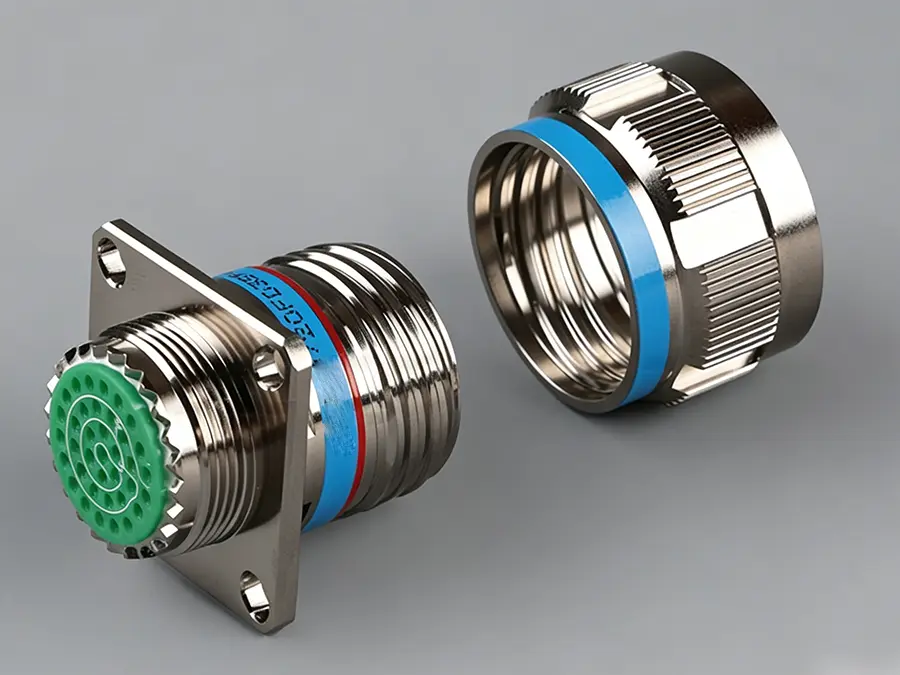
A connector may be a small part of a product. But when you cannot get it, that small part can hold up everything else.
Your customers are waiting. Your production schedule is already planned. You have invested time and money in a design that depends on a particular component. Now the supplier is telling you that delivery will take much longer than expected.
For a small business, this is more than a purchasing problem. It can affect the promises you have made to your customers.
This sourcing enquiry began with that difficulty: an overseas buyer needed to explore another supply route for connectors, while keeping the requirements of the existing equipment in mind.
The Customer Needed More Than a Lower Price
It is easy to assume that someone looking for a supplier in China is mainly trying to reduce costs.
Sometimes that is true. In this enquiry, however, the immediate concern was availability. The buyer needed to understand whether another manufacturer could offer a suitable alternative without creating new problems for the project.
Finding a cheaper connector would not help if it did not fit, required an unexpected design change, or lacked the documentation the buyer needed.
Before discussing quotations, we needed to understand what made the original part suitable—and which requirements an alternative would have to meet.
That is where a useful supplier search begins.
First, Understand the Part Already in Use
A photograph can help explain what a component looks like. A product name can point us towards a family of products. Neither gives us the whole picture.
For a connector enquiry, the original part number, drawings, contact arrangement, and application requirements are much more useful. They allow a supplier to respond to a specific request instead of making a general claim.
The original enquiry involved exploring a J599-series connector as a possible alternative to an existing MIL-DTL-38999-series part.
Those series names were a starting point for comparison. They were not enough to conclude that two particular parts could be exchanged without further checks.
The important questions concerned the exact parts: their dimensions, mating arrangements, contact configuration, materials, finishes, and the performance evidence relevant to the intended application.
If a supplier says, “Yes, we have an equivalent,” the next question should be, “Can you show us the details of the exact part you are proposing?”
A Factory List Is Only the Beginning
When people ask for help finding a factory, they often expect a list of names and contact details.
A list can be useful. But it still leaves the buyer with much of the difficult work.
Does the supplier actually make the required product? Is the proposed part already available, or does it need to be manufactured? Can the factory supply a sample? What documents can it provide? What quantity is realistic?
Delivery also needs careful discussion. A quoted lead time may refer to production alone. The buyer needs to know what happens before production begins and whether inspection, documentation, and dispatch are included in the schedule.
Our role is to help work through these questions with suppliers in China, clarify their answers, and bring the information back in a form the buyer can review.
The purpose is to make the next decision clearer, rather than leave the customer with another collection of unanswered messages.
Samples Help Turn a Possibility into a Decision
A promising quotation is encouraging. So is a specification that appears to match the requirement.
But there is still a difference between a candidate product and an accepted replacement.
A sample gives the buyer something specific to evaluate. Before ordering it, both sides should understand which part will be supplied, what information will accompany it, and which checks the buyer intends to carry out.
For applications with formal technical or approval requirements, the buyer’s qualified team needs to decide what evaluation is necessary. Sourcing support can help obtain information and coordinate the process, but it does not replace that technical decision.
This stage may take time. It is usually better to allow for that time than to discover a compatibility problem after placing a larger order.
For a small company, a carefully considered sample order can be a manageable next step.
Be Clear About What Happens After Approval
Even when a sample is accepted, the production order needs its own clear agreement.
The supplier and buyer should share the same understanding of the part specification, quantity, inspection requirements, documentation, packaging, and delivery arrangements.
Any agreed change should be recorded. If a material, finish, or production detail changes, the buyer needs to know before it becomes part of the shipment.
This is where consistent follow-up matters. A supplier search may open the door, but the details of the order determine whether both sides are working towards the same result.
I believe this is one of the most useful things a partner in China can do: keep asking the necessary questions and follow through on the answers.
What Another Small Business Can Learn
The lesson from this enquiry is not that every delayed component has a quick replacement in China.
Some alternatives are worth exploring. Others may involve evaluation costs, approval requirements, or design changes that make them unsuitable for the project.
The useful first step is to understand your options before making a commitment.
If you are facing a similar problem, gather what you already know: the part number, available drawings, expected quantity, current delivery difficulty, and the requirements you cannot compromise.
You do not need to prepare a perfect document. Even an incomplete brief gives us something concrete to discuss. We can identify what is missing and work through the next questions together.
China’s manufacturing capabilities can offer another route to investigate. The value comes from finding a route that makes sense for your particular business.
A Note from Bryan
I know that when a supply problem appears, you still have the rest of your business to run.
You may be answering customers, arranging production, and watching your budget at the same time. Finding and evaluating another supplier adds another responsibility to an already busy day.
If you need someone in China to help work through that part, you are welcome to contact me.
Tell me what you are using, what has become difficult, and what you hope to improve. I will help you understand what we can investigate and where further checks may be needed.
If an option does not make sense, I will say so. If there is a practical next step, we can discuss it before you commit.
We can start by getting to know each other and understanding the problem.
Bryan
Founder, Global China Bridge
Beijing, China